Detours
Angie's LandmarksRoadside Wisdom
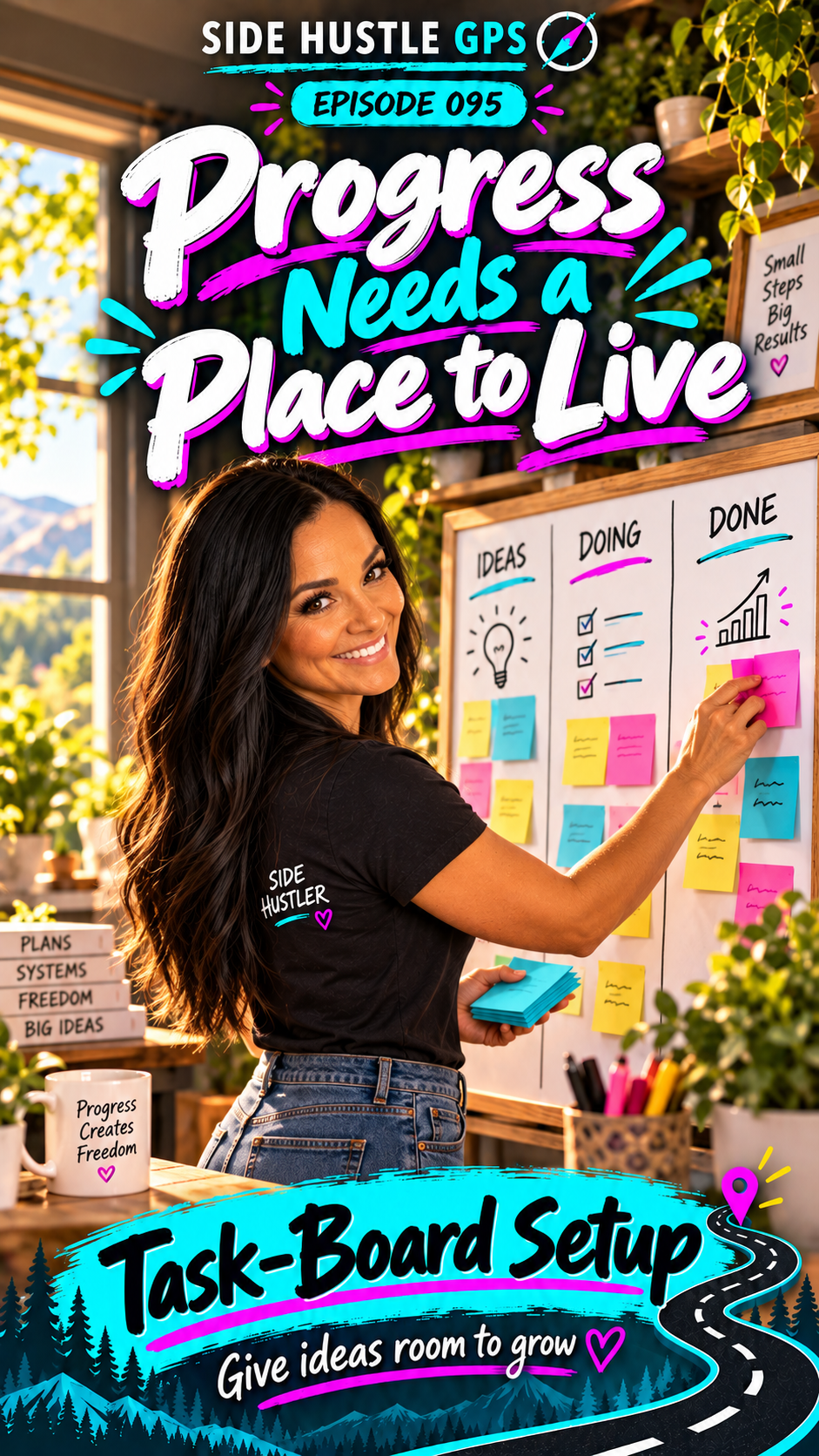
Progress Needs a Place to Live
Read transcript
Not gonna lie. I’m a nerd for project management tools.
Give me a task board with columns, little cards I can move around, and a place to check things off, and I am a happy girl.
Because when I can see what needs to happen, my brain can finally stop trying to remember everything.
I’m Angie Norris, and this is Side Hustle GPS.
Today, we’re stopping in Tech Junction to explore Task-Board Setup.
I loved Trello when I first started using it.
You could create columns, give them names, and move your tasks from one stage to the next.
Something that started as an idea could become something you were working on, and eventually something you finished.
There is something very satisfying about moving that little card into the done column.
I also remember using Basecamp in my corporate work.
We had to track our work, and while some people grumbled about the process, I loved having my tasks right in front of me.
I could check them in the morning, update their status, and understand what needed my attention.
That structure helped me stay on track.
And plenty of people need that same feeling, even if setting up the system isn’t their favorite thing.
That’s where you come in.
You can offer to help someone turn scattered tasks and ideas into a board they can actually use.
It could be for a business, a team, or an individual managing several projects.
And organization matters at home, too.
In my family, we share a calendar because we have sports, family events, holidays, birthdays, parent-teacher conferences, and doctor’s appointments.
Everybody needs to know what’s happening.
A calendar helps us see when. A task board can help us see what needs to get done—and who’s doing it.
Think about planning a family trip, organizing a fundraiser, or launching a new service.
There are steps involved. Someone needs to handle each one. And some things can’t move forward until something else is finished.
You can make those steps easier to see.
Start by understanding how the person works.
Where do requests come from? What gets forgotten? What keeps getting delayed? Who needs to know when something changes?
Then build around those answers.
A simple board might have three columns: to do, doing, and done.
Another client might need a place for incoming requests, work waiting for approval, and completed projects.
You can use AI to help turn their process into suggested stages, task templates, and setup instructions.
Describe the team, the type of work, and where things get stuck. Then review the suggestions with the people who will actually use the board.
Because a system only helps if people understand it and keep using it.
You don’t need to add every feature just because it exists.
Give each task a clear name. Add an owner and a useful due date where needed. Make the next step easy to find.
Then show the client how to maintain it.
Your first money move?
Choose one person with one project that feels scattered.
Offer a clearly priced setup that includes a simple board, their current tasks organized into it, and a short walkthrough.
Help them move one real task from beginning to completion so they can experience how it works.
So, what project in your world needs somewhere to live besides someone’s head?
Explore Task-Board Setup in Tech Junction at SideHustleGPS.com.
Progress needs a place to live.
Give ideas room to grow—and give people a clear next step to take.
Give ideas room to grow