Detours
Angie's LandmarksRoadside Wisdom
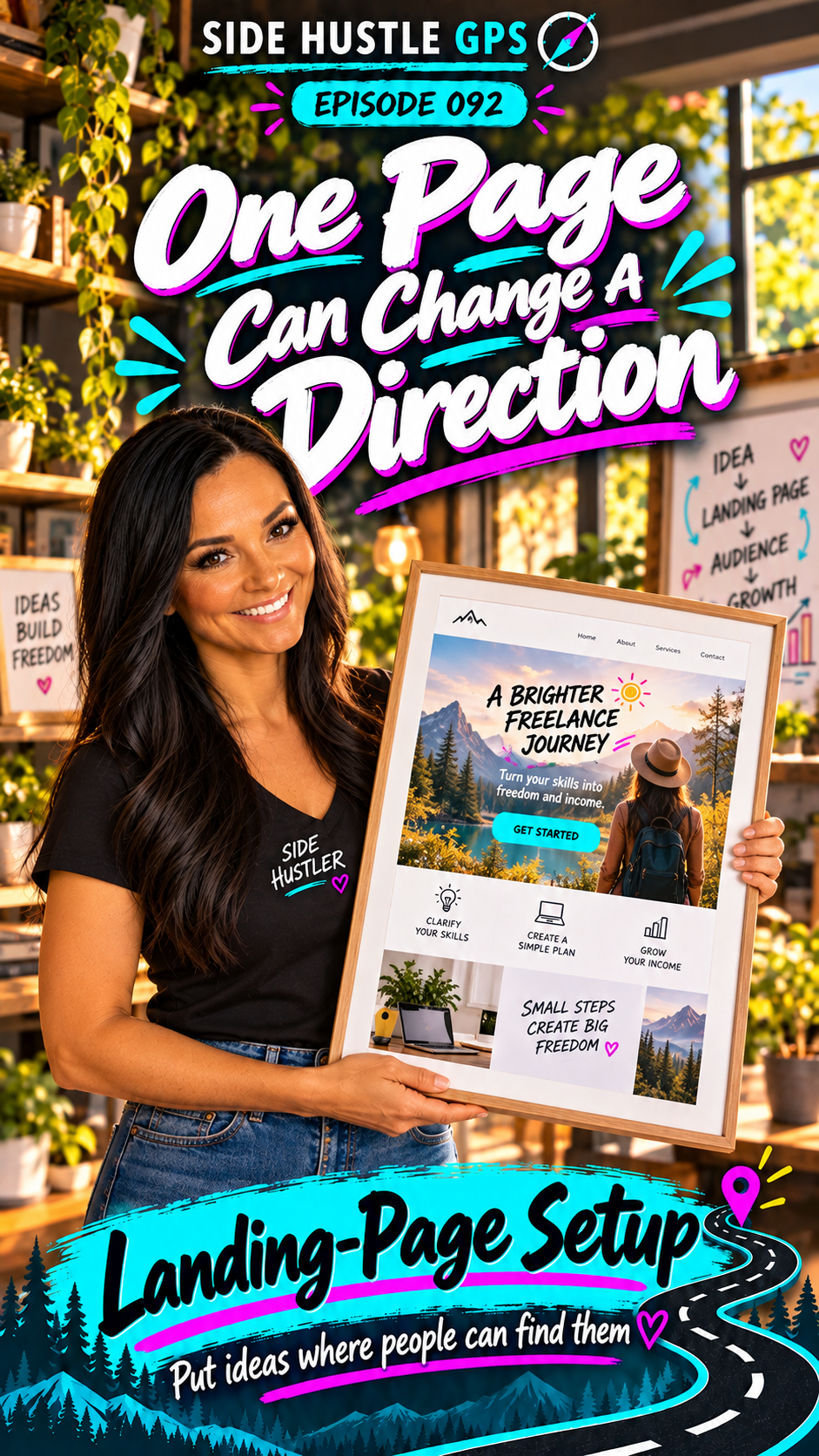
One Page Can Change a Direction
Read transcript
I put a PayPal button on a webpage, crossed my fingers, and waited.
Within minutes, thirty-five-dollar payments started showing up in my account.
Cha-ching.
That little page helped turn my Halloween bus party into something I could organize, collect payments for, and grow.
I’m Angie Norris, and this is Side Hustle GPS.
Today, we’re stopping in Tech Junction to explore Landing-Page Setup.
In an earlier episode, I shared how I ran a Halloween bus party for ten years. Eventually, we had nine buses and around 350 people.
But at the beginning, I needed a way to collect the money before the event.
This was around the year 2000. I was using Dreamweaver to build websites, and I signed up for PayPal.
I created a page for HalloweenBusParty.com, added an image and a payment button, and hoped I had connected everything correctly.
And it worked.
People could find the information, decide they wanted to come, and pay for their spot.
That was powerful because I could plan around actual registrations.
A landing page gives someone a place to take a specific action.
Purchase an offer. Register for an event. Download a resource. Request more information.
One clear purpose gives the page direction.
And once I saw what that could do, I started thinking about other possibilities.
That’s how I came up with money tree websites for couples getting married.
Picture a tree with different gift amounts on its branches. Ten dollars. Twenty-five dollars. One hundred dollars. And other amounts guests could choose.
Below it was a poem explaining that the couple already had plenty of household things and would appreciate a contribution toward their next chapter.
I made different parts of that tree clickable. When someone selected an amount, it took them to the couple’s PayPal payment link.
The money went directly to the couple.
They paid me to create the page.
I used this idea for my own weddings, too. For one of them, I remember receiving around thirteen thousand dollars in gifts before we had to pay for our destination wedding.
That was my experience, and those were gifts from our guests. But it showed me how useful one thoughtfully designed page could be.
It gave people an easy way to do something they already wanted to do.
And that’s the opportunity you can offer someone else.
A business launching a service. A speaker sharing a promised download. An organizer collecting registrations.
They have an idea. You help them put it somewhere people can act on it.
AI can help you outline the page, draft the wording, explore designs, and prepare a first version.
Give it the audience, the offer, and the action visitors should take.
Then review the details and test the experience.
Does it work on a phone? Does the form submit? Does the payment button go to the right account? What happens after someone clicks?
Those connections matter as much as the design.
And while it’s fun to imagine adding registries, RSVPs, photo uploads, and more, begin with the purpose you agreed to deliver.
You can offer additional features separately.
Your first money move?
Choose one person with an upcoming event, offer, or resource.
Ask, “What’s the one action you want someone to take?”
Create a sample page around that answer, then offer a clear setup package with a price, timeline, and defined scope.
So, what idea in your world needs a page people can actually visit?
Explore Landing-Page Setup in Tech Junction at SideHustleGPS.com.
One page can change a direction.
Put ideas where people can find them—and give them a clear next step.
Put ideas where people can find them