Detours
Angie's LandmarksRoadside Wisdom
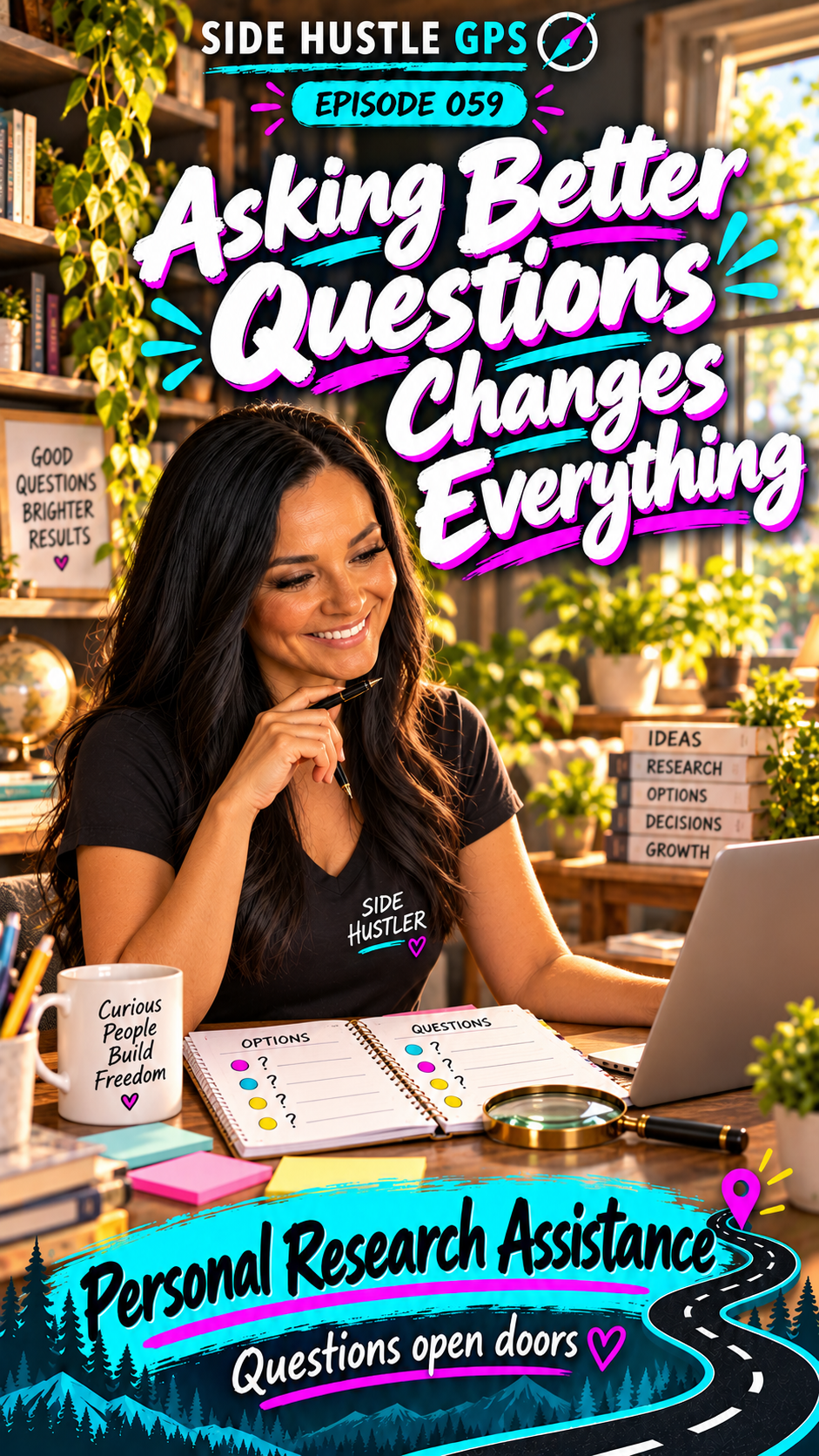
Asking Better Questions Changes Everything
Read transcript
When I’m in a meeting, I try to listen 80 percent of the time and talk 20 percent.
And during that 20 percent, I try to spend most of it asking the right questions.
Because better questions help me understand what someone actually needs.
I’m Angie Norris, and this is Side Hustle GPS.
Today, we’re stopping in Helping Hills to explore Personal Research Assistance.
Asking better questions makes my work better.
It helps me guide a conversation, understand the problem, and find useful answers more quickly.
And sometimes, the most useful thing you can provide is a clear explanation of someone’s options.
I know what it feels like to need that help.
After my father passed away, I took on the responsibility of helping care for my mom.
She hadn’t handled the bills, house issues, or real estate taxes. She hadn’t even used a debit card.
Suddenly, there were things we needed to understand and decisions we needed to make.
Then came Medicare.
I felt like a deer in headlights.
I wanted someone who understood it to give me the CliffsNotes version: what I needed to know, what questions to ask, and where to get the right help.
That experience reminds me that people don’t always need more information.
Sometimes, they need help making sense of the information already out there.
That’s where personal research assistance can become a service.
You could help someone compare wedding venues, research local service providers, or organize options for an appliance purchase.
Families might need help gathering information about funeral homes or senior living communities.
Someone else might want to compare cell phone providers in their area or find several real estate professionals to interview.
The topic changes. The skill is finding useful information and making it easier to understand.
Start with questions.
What decision are they trying to make? What matters most? What’s their budget, location, or deadline? What have they already tried?
Those answers help you research the right things.
AI can help you develop questions, structure a comparison, and summarize material you’ve gathered.
But check the original sources.
Confirm current prices, availability, and details directly when they matter. Include links and explain what still needs to be verified.
For medical or insurance questions, help organize information from reliable sources and prepare questions for a qualified professional.
You can make that conversation easier without making the decision for the person.
Questions open doors.
And a clear comparison can help someone feel ready to take their next step.
Your first money move?
Choose one everyday topic you can research confidently.
Create a sample comparison of three options, with the same useful details for each one.
Then offer a small research package: one defined question, an agreed number of options, and a concise summary with sources.
Be clear about what you’ll deliver and when.
The value is in doing the legwork thoughtfully and giving someone findings they can actually use.
So, what question is someone in your life struggling to find time—or confidence—to research?
Explore Personal Research Assistance in Helping Hills at SideHustleGPS.com.
Asking better questions changes everything.
Listen closely, find out what matters, and help someone see their options more clearly.
Questions open doors