Detours
Angie's LandmarksRoadside Wisdom
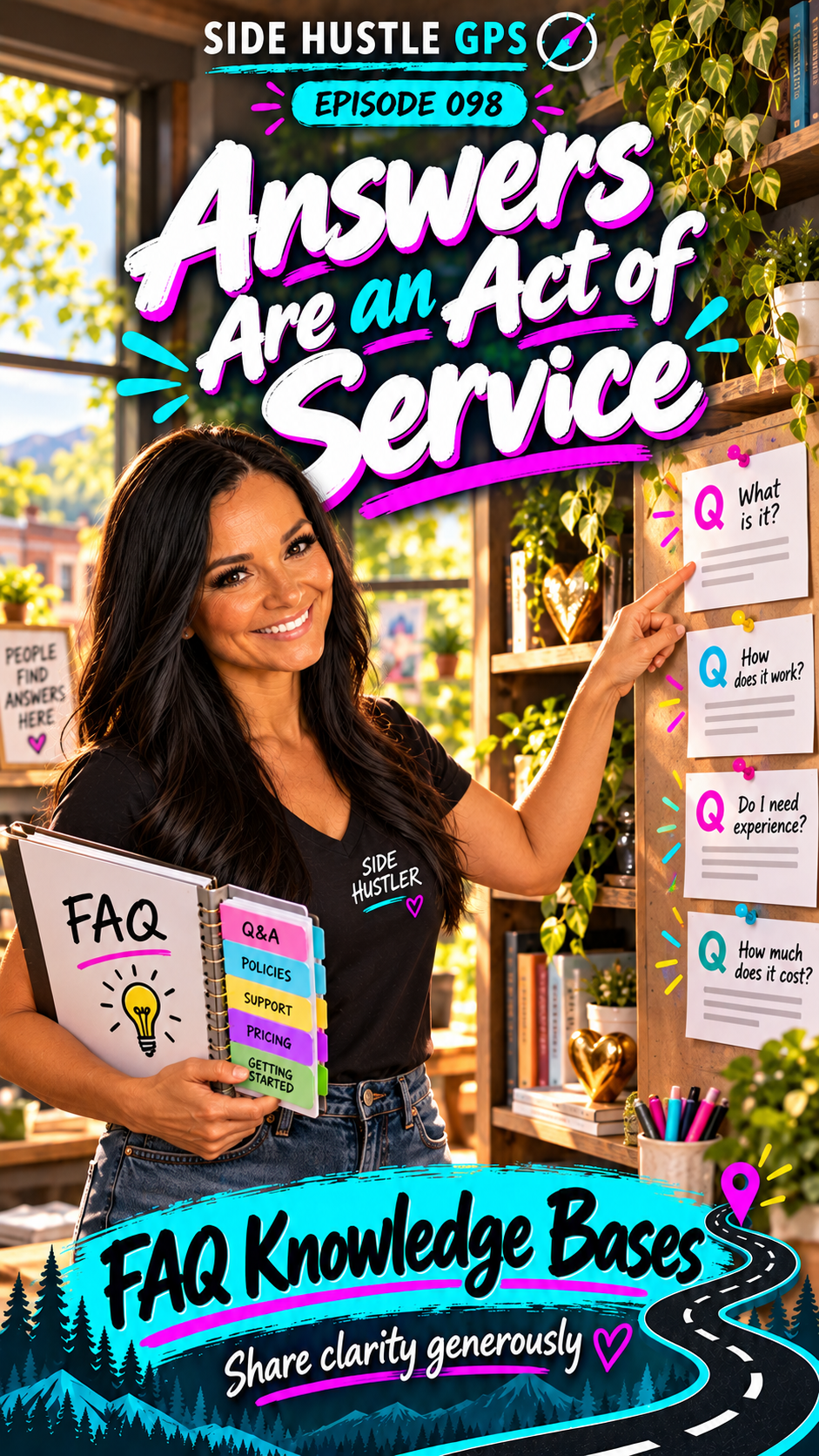
Answers Are an Act of Service
Read transcript
I always say, “I’m here to serve you, but I am not your servant.”
And part of serving people well is giving them a way to find answers without having to wait for me every time.
I’m Angie Norris, and this is Side Hustle GPS.
Today, we’re stopping in Tech Junction to explore FAQ Knowledge Bases.
I’ve helped brands with their masterminds and memberships, and I’ve run my own communities, too.
So I know what it’s like to answer the same questions over and over.
Where do I start? Where’s the recording? What’s included? How do I get help?
And I certainly know my share of extra-inquisitive people.
But here’s something I’ve learned.
The person asking all those questions often wants to get the most out of the experience.
They’re trying to understand. They want the details. They don’t want to miss something important.
And if I’m being honest, some of the people who initially tested my patience became the people I was most fond of later.
Once they got comfortable, they became incredible cheerleaders.
That taught me to slow down and understand why someone is asking.
Because clarity helps people take action.
If they’re confused about where to begin, they might never begin.
If they’re unsure what an offer includes, they might never purchase.
A helpful answer can remove that obstacle.
And when you organize those answers somewhere people can find them, you can serve more people without personally repeating every explanation.
That’s what a knowledge base can do.
It brings answers, instructions, policies, resources, and tutorials into one organized place.
It might be a customer help center, a member resource library, an onboarding guide, or an internal reference for a team.
In an earlier episode, we talked about creating FAQs.
Here, we’re giving those answers a useful home.
Something people can browse or search when they need help.
And you can offer to build that for a business.
Start with the questions they already receive.
Ask the owner and the support team what they explain most often. Gather the approved answers, existing instructions, and relevant tutorials.
Then organize them around what people are trying to do.
Getting started. Accessing an account. Understanding a service. Finding a recording. Resolving a common issue.
You can use AI to suggest categories, simplify wording, and turn long explanations into clear steps.
But the business needs to approve the information.
If an answer is missing or two instructions conflict, ask for clarification before publishing.
The goal is to make the right information easier to understand.
And make it easy to find, too.
Use titles that sound like the questions customers actually ask. Put links where people naturally look. Include a clear way to contact someone when the resource doesn’t solve their problem.
A knowledge base should feel helpful when someone needs an answer.
Your first money move?
Find one business or community that keeps answering the same questions.
Offer a small starter knowledge base: ten common questions, approved answers, simple categories, and a walkthrough showing the owner how to update it.
You could charge for the setup and offer ongoing updates as a separate service.
Each new question can become a clue about what belongs there next.
So, whose knowledge could you help turn into something more people can use?
Explore FAQ Knowledge Bases in Tech Junction at SideHustleGPS.com.
Answers are an act of service.
When you make them easier to find, you respect someone’s time and help them move forward.
Share clarity generously.
Share clarity generously