Detours
Angie's LandmarksRoadside Wisdom
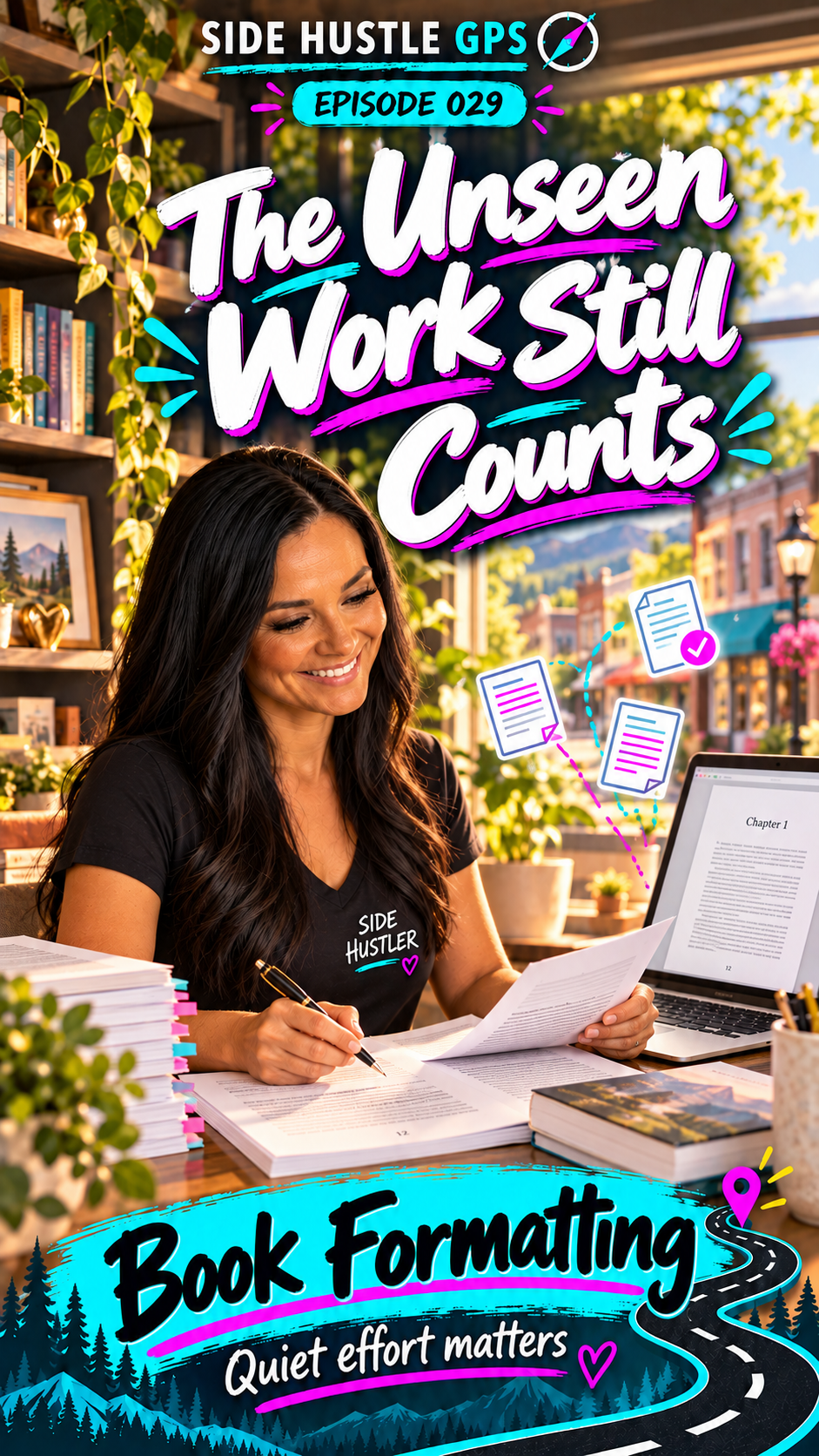
The Unseen Work Still Counts
Read transcript
When you hold a finished book in your hands, you see the cover. The author’s name. The story inside.
What you don’t see is all the patient work that made those pages ready for you to read.
I’m Angie Norris, and this is Side Hustle GPS.
Today, we’re stopping in Storybook Valley to explore Book Formatting.
My first book project was back in 2020. Someone asked if I wanted to contribute a chapter to a book called *The Entrepreneur’s Playbook.*
Of course, I said yes! I thought, how cool is that?
We’d been taught that having a book helps build authority. And let me tell you, when you’re giving a presentation and can hold up a book with your face on the cover, people do sit up a little straighter.
It gives you another way to share your experience and show what you have to offer.
After that book went on Amazon, I contributed to four or five more books. I’m still very proud of those projects.
But here’s why I’m telling you this: every one of those books needed work beyond writing the chapters.
Someone had to bring everything together and make it look presentable.
The headings. The spacing. The chapter openings. The page numbers. All those little details that help a reader move through a book without getting distracted.
Across those projects, professionals were paid to help with formatting and the publishing process.
That behind-the-scenes work has value.
A couple of years ago, I participated in a women’s book with 26 authors, organized from A to Z. My chapter was X, and it was the only chapter about AI.
I wrote about side hustles and helping women understand how to put AI to work.
Now, think about what it takes to bring 26 different voices into one finished book. You want each author’s personality to come through, while the pages feel consistent from beginning to end.
That takes patience.
And if you enjoy organizing information and getting the details right, book formatting could be a service you offer.
Today, AI and software can help make that process easier.
Book Bolt is one tool I’ve enjoyed using. I also use Claude to help prepare documents, and AI assistance in tools like Google Docs can support parts of the process.
The amount of time you save depends on the project. You still need to check the finished file against the publishing platform’s requirements and review how the pages actually look.
Do the chapters start where they should? Are the headings consistent? Did a paragraph or image land in an awkward place?
Those checks are part of what your client is paying you for.
Because an author may have a manuscript they’re excited about—and absolutely no desire to spend hours adjusting margins and page breaks.
You can help them take that next step.
Your first money move?
Take a short manuscript you own or have permission to use and format a sample chapter. Create a before-and-after that shows how you made it clearer, more consistent, and easier to read.
Then offer one specific service: formatting a completed manuscript into a polished book interior.
Start with a manageable project, define what’s included, and give yourself time to review it carefully.
You could also bring several authors together for a book project of your own. My experience as a contributing author gave me a new channel for my voice—and it could do the same for someone else.
So, what quiet skill do you have that could help another person finally finish something important?
Explore Book Formatting in Storybook Valley at SideHustleGPS.com.
The unseen work still counts.
Quiet effort matters—and your patience could help someone turn a manuscript into a book they’re excited to share.
Quiet effort matters