Detours
Angie's LandmarksRoadside Wisdom
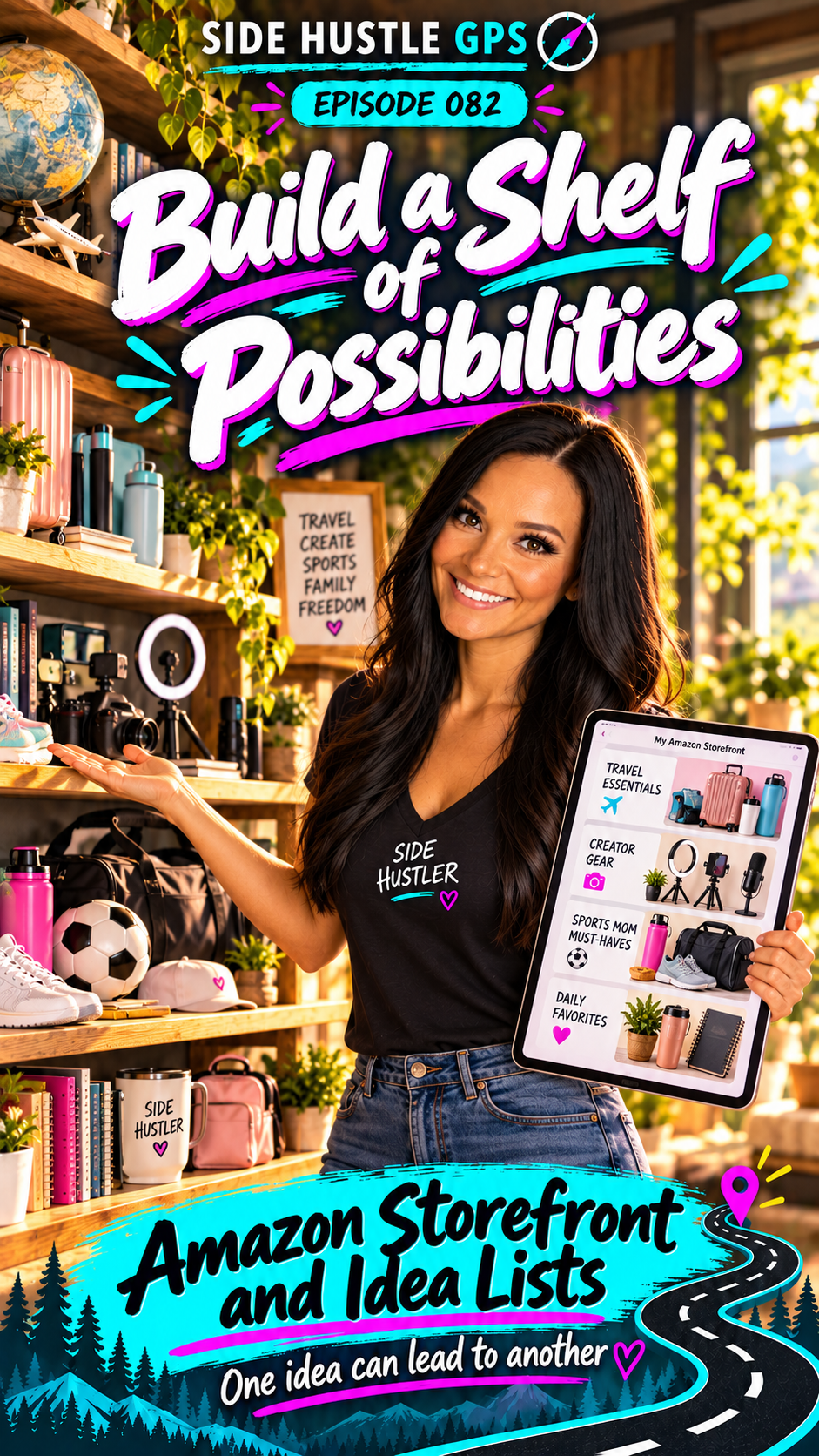
Build a Shelf of Possibilities
Read transcript
“Angie, where did you get that microphone?”
“Where did you find that chair?”
“What do you bring to all those soccer games?”
Instead of searching for every product separately, I can share a collection I’ve already put together.
That’s what I love about idea lists.
I’m Angie Norris, and this is Side Hustle GPS.
Today, we’re stopping in Discovery District to explore Amazon Storefront and Idea Lists.
In the last episode, we talked about Amazon Influencer videos.
But your storefront can hold more than videos. You can also organize product recommendations into themed idea lists.
Think of them as shelves of possibilities.
Each shelf helps someone shop for a particular need, interest, or occasion.
For back-to-school, I could bring together backpacks, Trapper Keepers, calculators, pens, pencils, and pencil boxes.
For sports moms? Now we’re talking about my life.
Heated jackets. Folding chairs. Stadium seats. Tumblers. The things that help us spend hours cheering from the sidelines.
And for people asking about my content setup, I could create a list with my microphone, ring light, tripod, and other equipment.
Then, when someone asks where I found something, I have a useful place to send them.
They can see the item they asked about and explore the other things in that collection.
One idea can lead to another.
Pet favorites. Creative supplies. Cooking tools. Hobby equipment.
I could make a collection inspired by my husband’s garage or the shoes we have in this house.
Once you start thinking about the questions people ask and the products you use, there are plenty of directions to explore.
But give each list a clear purpose.
“Things I like” is broad.
“What I bring to a cold-weather soccer game” helps someone immediately understand why they might want to look.
You’re saving them some searching and giving them context.
AI can help you brainstorm themes, organize categories, and draft a useful title or introduction.
You make the recommendations.
Start with products you know, explain your experience honestly, and check that you’ve selected the correct item and version.
You don’t have to fill a list with everything you can find. A focused collection can be easier to use.
And keep it current as your recommendations change.
As an eligible participant, you can earn commissions from qualifying purchases through your affiliate recommendations. Make that relationship clear when you share.
Amazon may also select eligible storefront content for discovery within its own shopping experience, but creating a list doesn’t guarantee placement, traffic, or sales.
Think of this as building a useful resource you can keep sharing.
Later, you could create a collage or video around a collection and direct people to it from your social content.
But start with the list itself.
Your first money move?
If you already have an Amazon Influencer storefront, choose one question people regularly ask you and build a small idea list that answers it.
Give it a clear title, add relevant products, and review the finished collection.
Then share it where it’s welcome and permitted, with your affiliate disclosure.
If you’re exploring the program, revisit the Amazon Influencer route to learn about getting started.
So, what do people already ask you to recommend?
Explore Amazon Storefront and Idea Lists in Discovery District at SideHustleGPS.com.
Build a shelf of possibilities.
Start with one useful collection—and let the next idea grow from there.
One idea can lead to another